
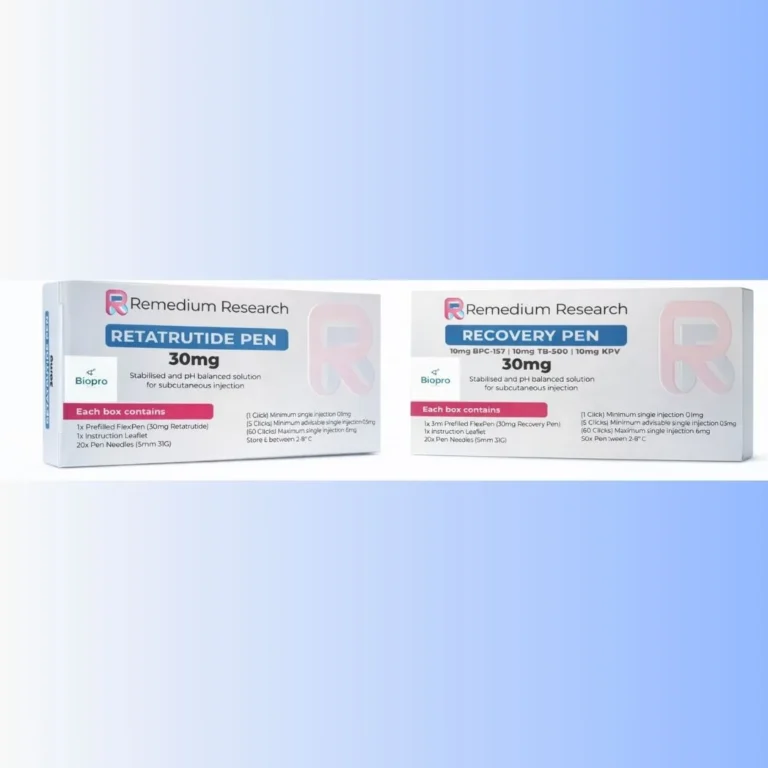
£170.99
Research information about the Retatrutide and Recovery Pen 30mg formulation, including retatrutide, BPC-157, TB-500, KPV and related peptide research.
About the Retatrutide and Recovery Pen 30mg
Retatrutide Research
Retatrutide and Recovery Pen 30mg research product
Frequently Asked Questions
What is the Retatrutide and Recovery Pen 30mg?
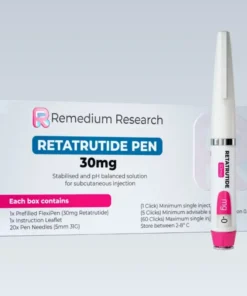
The Retatrutide and Recovery Pen 30mg is a research product bundle comprising a retatrutide formulation and a Recovery Pen formulation labelled as containing BPC-157, TB-500 and KPV.
What does the Recovery Pen contain?
According to the product label, the Recovery Pen formulation contains 10mg BPC-157, 10mg TB-500 and 10mg KPV, giving a stated total of 30mg.
What is retatrutide?
Retatrutide is an investigational peptide being studied for activity at three hormone receptors: GLP-1, GIP and glucagon. Research has examined its relationship with metabolic and endocrine biology.
What is retatrutide research focused on?
Research involving retatrutide has examined GLP-1, GIP and glucagon receptor signalling, metabolic biology and related physiological processes. Retatrutide remains an investigational compound undergoing clinical research.
What is BPC-157 research?
BPC-157 has been investigated primarily in preclinical research involving biological, cellular and molecular processes. Findings should be interpreted according to the specific experimental model and available scientific evidence.
What is TB-500 research?
TB-500 is associated with research into peptide biology and cellular processes in experimental research models. Scientific findings should be considered in the context of the specific compound and research methodology.
What is KPV research?
KPV is a short peptide sequence that has been investigated in experimental research involving biological and cellular pathways. Research findings depend on the experimental conditions and methodology used.
What does 30mg refer to?
The 30mg designation refers to the stated quantity associated with the respective formulation. It should not be interpreted as a recommended human dose or treatment instruction.
Is retatrutide approved for public use?
No. As of September 2026, retatrutide remains investigational and has not been approved by the FDA. It is currently being studied in Phase 3 clinical trials.
Can laboratory testing establish clinical safety?
No. Laboratory analysis can provide information about the characteristics or composition of a research material, but analytical testing alone does not establish clinical safety, effectiveness or suitability for human use.
Does this page provide medical or dosing advice?
No. The information on this page is provided for general scientific and research purposes and should not be interpreted as medical advice, prescribing information or instructions for human use.
Be the first to review “Retatrutide and Recovery Pen 30mg | Research Information”
Related products
Reviews
There are no reviews yet.